ABRUZZO BEHIND THE SCENES

The Schiavi di Abruzzo organ: restoring San Maurizio’s instrument

In 2011, the Inzoli-Bonizzi organ-building firm restored the organ at the Church of San Maurizio in Schiavi di Abruzzo, in the province of Chieti, Italy. Described as dating to 1795 and attributed to the D’Onofrio family of organ builders, the instrument was not playable when it was dismantled. Photographs and technical records trace the restoration through to its reassembly and tuning back in the church.
Explore the restoration
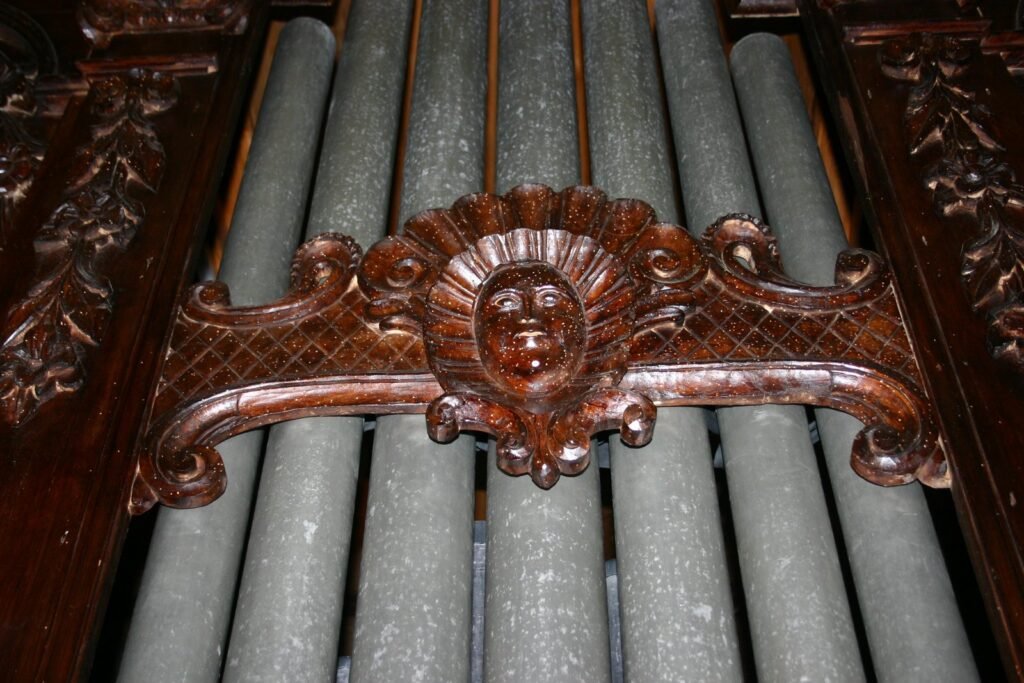
Dettaglio della cassa e delle canne di facciata dell’organo di San Maurizio a Schiavi di Abruzzo dopo il restauro del 2011

Detail of the case and facade pipes after restoration, 2011.
Photo: INZOLI CAV. PACIFICO E F. DI BONIZZI F.LLI
Abruzzo Behind the Scenes explores the people, processes, and skills behind the region’s heritage and local businesses. This story looks inside the restoration of a historic musical instrument.

These photographs document the 2011 restoration. They do not show the organ’s current condition.

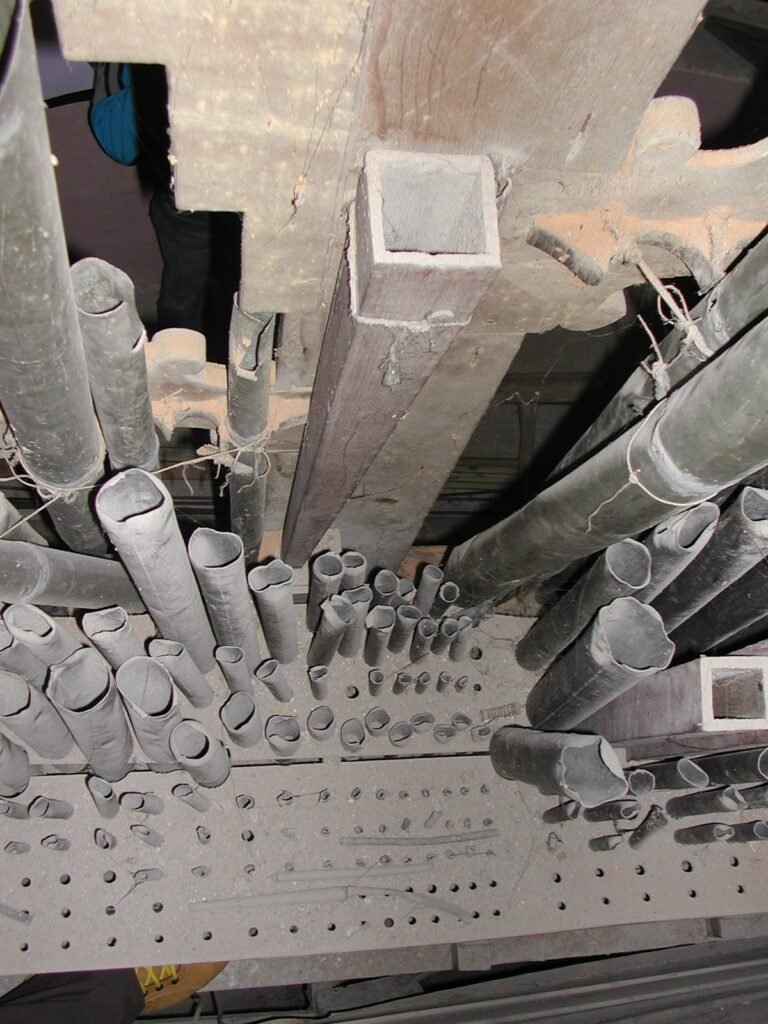
Interno dell’organo di San Maurizio a Schiavi di Abruzzo prima del restauro del 2011

Inside the organ before restoration, 2011.
Photo: INZOLI CAV. PACIFICO E F. DI BONIZZI F.LLI
Before restoration: an organ that could no longer play

The initial inspection found missing or damaged pipes, layers of dust, and wood affected by woodworm. Only the remains of one bellows survived from the wind supply system. The keyboard had nonoriginal plastic coverings fitted over the old key levers.

The Inzoli-Bonizzi organ-building firm’s report describes these conditions alongside photographs, measurements, and inventories. Together, they provide the starting point for understanding which parts could be retained, restored, or reconstructed.

In the workshop: understanding the instrument first

Measurements and photographs were taken before and during dismantling. The components were then packed and transported to the workshop in Ombriano di Crema, in northern Italy.

Restoration also addressed parts usually hidden from view: windchests, wind ducts, internal pipes, and the mechanical action. Windchests distribute air to the pipes; the action connects the organist’s controls to the instrument’s mechanisms. Restoring these components was part of recovering the organ’s ability to function.

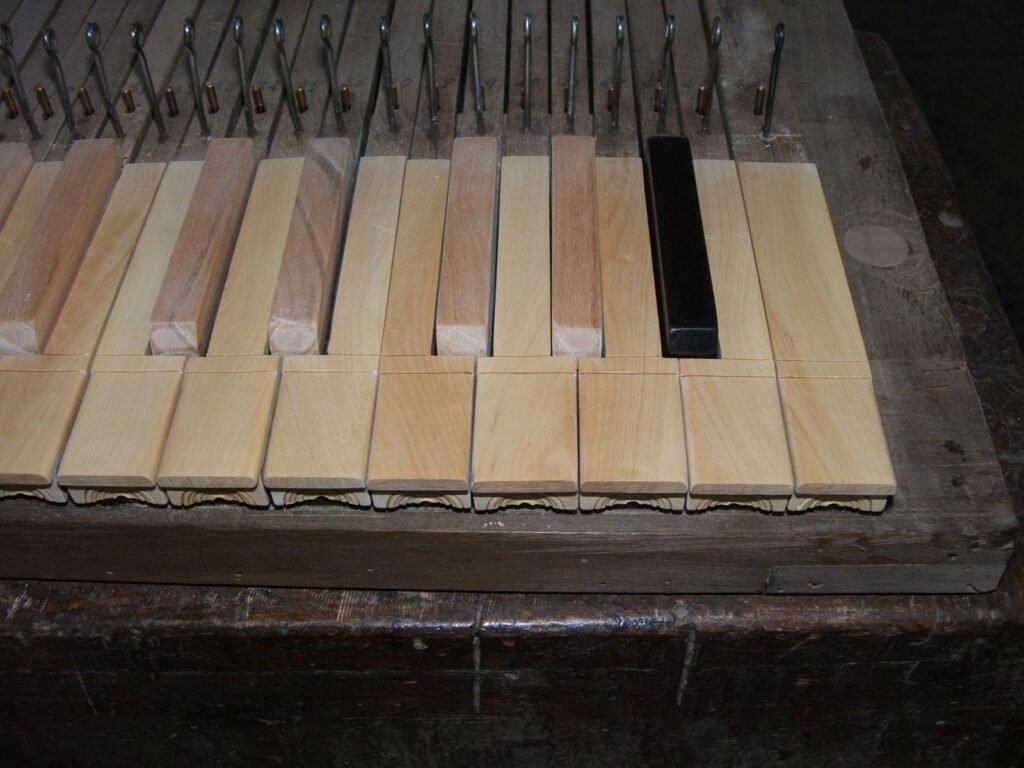
Tastiera dell’organo di San Maurizio durante i lavori di restauro del 2011

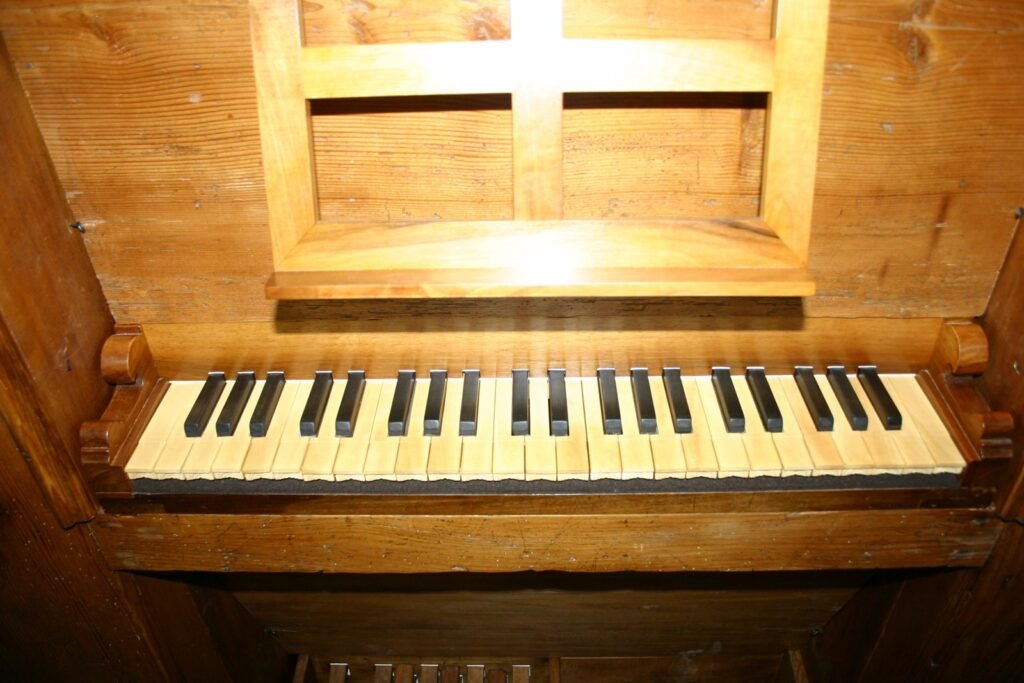
The keyboard during restoration work, 2011.
Photo: INZOLI CAV. PACIFICO E F. DI BONIZZI F.LLI
Tastiera dell’organo di San Maurizio dopo il restauro del 2011

The keyboard after restoration, 2011.
Photo: INZOLI CAV. PACIFICO E F. DI BONIZZI F.LLI
Pipes, keys, and bellows: a closer look at the work

The pipes

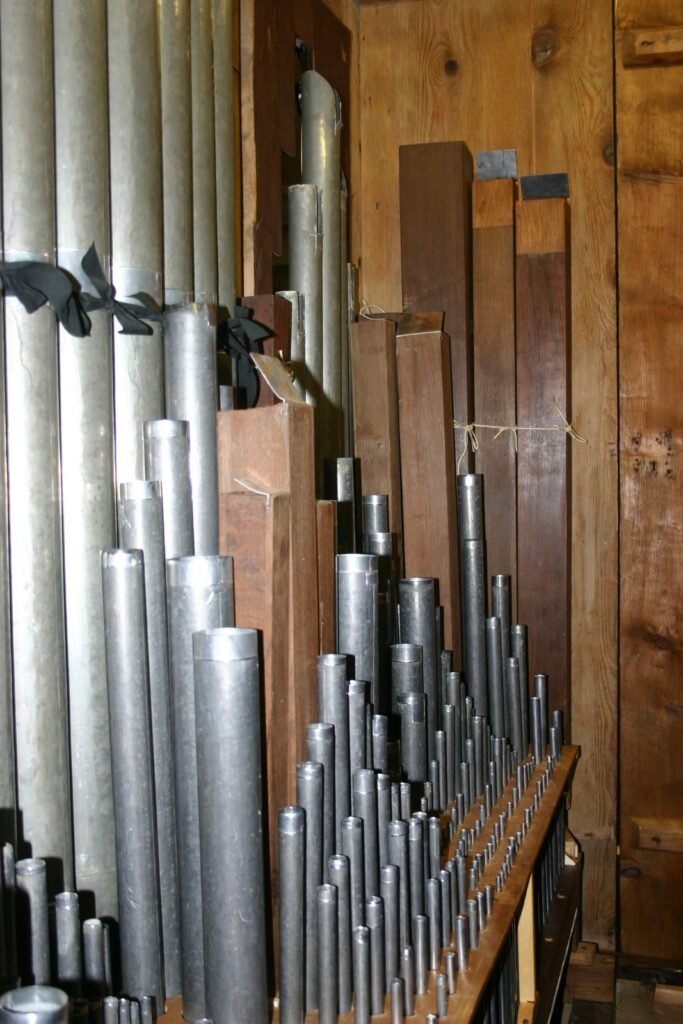
Metal pipes were inventoried, measured, and cleaned; dents and splits were repaired. Missing pipes were reconstructed. Wooden pipes also needed cleaning, consolidation, and repairs to damaged sections.

The keyboard

The key coverings were reconstructed in boxwood for the natural keys and ebony for the sharps, following D’Onofrio models. The report also records work on the pedalboard and mechanical connections.

The wind supply

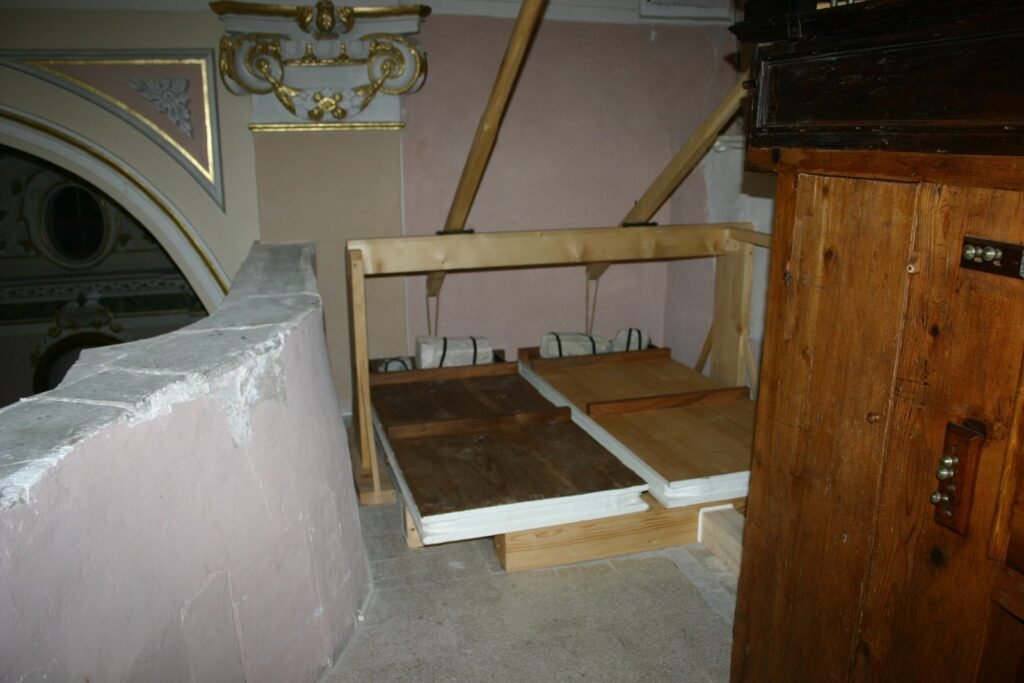
The surviving bellows was restored, and a new five-fold wedge bellows was built to match it. The manual pumping mechanism and wind ducts were repaired, and an electric blower was installed to supply air to the instrument.

Canne interne dell’organo di San Maurizio dopo il restauro del 2011

Pipes inside the organ after restoration, 2011.
Photo: INZOLI CAV. PACIFICO E F. DI BONIZZI F.LLI

Sistema dei mantici dell’organo di San Maurizio dopo il restauro del 2011

The bellows system after restoration, 2011.
Photo: INZOLI CAV. PACIFICO E F. DI BONIZZI F.LLI

Back at San Maurizio

After checks in the workshop, the restored components returned to Schiavi di Abruzzo. The organ was reassembled in the Church of San Maurizio, followed by final voicing adjustments and tuning, as recorded in the report dated September 20, 2011.

This story follows that documented restoration. Information about the organ’s current condition or opportunities to hear it requires an update from the local community.

Understanding a place’s heritage, wherever you live

For people living in Schiavi and those connected to the town from abroad, these steps offer another way to get to know San Maurizio. The photographs reveal the skills and work involved in caring for its heritage, including the parts that disappear from view once the restoration is complete.

Read more stories

Sources and credits

Primary source: Inzoli-Bonizzi, final report on the restoration of the anonymous organ dated 1795, attributed to the D’Onofrio family, at the Church of San Maurizio in Schiavi d’Abruzzo (CH), Crema, September 20, 2011 (original in Italian). References: historical account, p. 4; condition before dismantling, p. 10; restoration work, pp. 12-14. Page numbers follow the document’s internal numbering.

The D’Onofrio attribution follows the source; it is not a confirmed identification of the original builder.

2011 photographs: INZOLI CAV. PACIFICO E F. DI BONIZZI F.LLI; Materials supplied by Inzoli-Bonizzi. Text and editorial adaptation: Abruzzo Connections.

Inzoli-Bonizzi organ builders

ABRUZZO CONNECTIONS

 
From Roots to Relationships
A digital space to connect Abruzzo, Abruzzese communities around the world, stories, territories, experiences, and local know-how.


QUICK LINKS


THE PROJECT

 
Abruzzo Connections was created as part of the “Radici che Uniscono” project, promoted by the Association of Abruzzese People in Paraguay and carried out with the support of CRAM – Regional Council of Abruzzese Communities Abroad / Abruzzo Region. CUP: C74H25000280009.
 
 
Photo credits: Marco Cirulli, Daniele Mauro, Angelo Ninni, Onayer Rosa Garrido, and Giampaolo Di Biase
© 2026 Associazione degli Abruzzesi in Paraguay — Abruzzo Connections.
All rights reserved, except for materials credited to their respective authors and rights holders.